

Commercial Property Maintenance Checklist for Fall & Winter in Monmouth County, NJ
If you own or manage a retail strip, office building, medical suite or multi-unit rental in Monmouth County, the next few months decide whether your winter is quiet or expensive. A clogged roof drain in November becomes a ceiling leak in January. A burst pipe in a vacant unit can mean drywall, flooring and a lost tenant. And an icy entrance is a liability claim waiting to happen.
The good news: almost every costly winter problem is preventable with a simple seasonal routine. Use this fall and winter checklist — built for Jersey Shore weather, from Howell and Freehold to Red Bank and Asbury Park — to protect your building, your tenants and your budget.
Why fall and winter prep matters at the Jersey Shore
- Freeze-thaw cycles. Monmouth County swings above and below freezing many times each winter, which opens cracks in asphalt, masonry and caulk.
- Nor’easters. Coastal storms bring wind-driven rain, heavy wet snow and flooding, often in the same week.
- Salt air. Near the coast, salt speeds up corrosion on railings, HVAC units and exterior fixtures.
- Liability. In New Jersey, commercial property owners are generally responsible for keeping the public sidewalks next to their property reasonably safe, including from snow and ice. Many towns also set a deadline for clearing after a storm, so check your local ordinance.
Fall Commercial Property Maintenance Checklist (September – November)
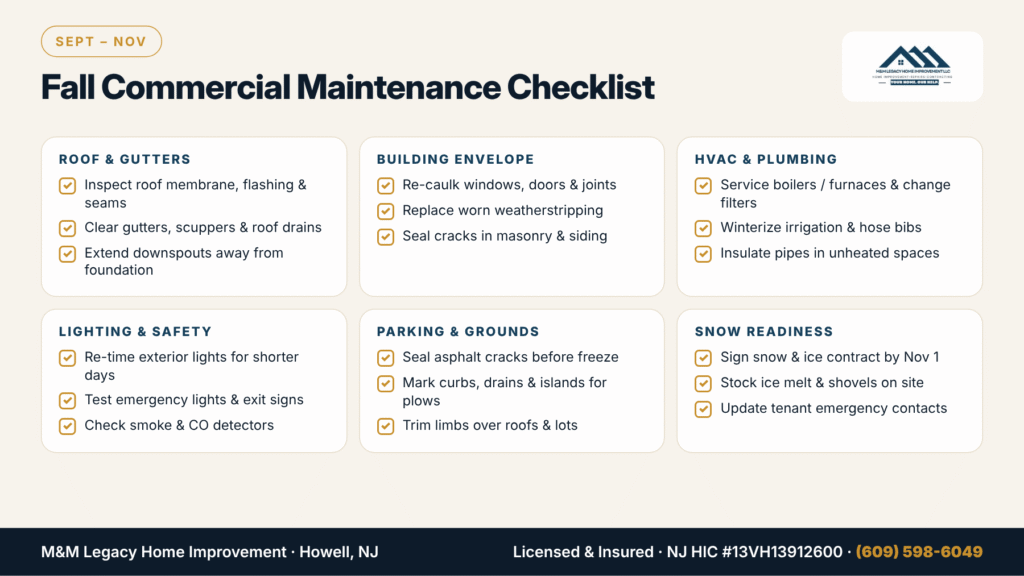
Roof and gutters
- Inspect the roof membrane, flashing, seams and penetrations for splits or blisters
- Clear gutters, scuppers and roof drains after the leaves drop — usually late October to mid-November
- Extend downspouts so water drains away from the foundation and walkways (where it would refreeze)
- Trim tree limbs hanging over the roof, parking areas and power lines
Building envelope
- Re-caulk windows, storefront glass, doors and expansion joints
- Replace worn door sweeps and weatherstripping
- Seal cracks in masonry, stucco and siding before water gets in and freezes
- Check that exterior doors close, latch and lock properly
HVAC, plumbing and fire safety
- Schedule boiler, furnace and rooftop-unit service and replace filters
- Shut off, drain and blow out irrigation systems and exterior hose bibs
- Insulate exposed pipes in unheated areas: crawl spaces, mechanical rooms, stairwells
- Locate and label every main and unit water shut-off valve
- Have fire sprinkler systems inspected, especially dry systems in unheated spaces
- Test smoke and CO detectors, emergency lights and exit signs
Lighting, parking and grounds
- Re-time exterior and parking-lot lights for shorter days; replace failed bulbs
- Seal asphalt cracks and patch potholes before the first hard freeze
- Mark curbs, drains, islands and fire hydrants with snow stakes for plow drivers
- Repair loose handrails, uneven pavers and trip hazards at entrances
Snow readiness
- Sign or renew your snow and ice removal contract before the first storm
- Stock ice melt, shovels and spreaders on site
- Update tenant and vendor emergency contact lists
Winter Commercial Property Maintenance Checklist (December – March)
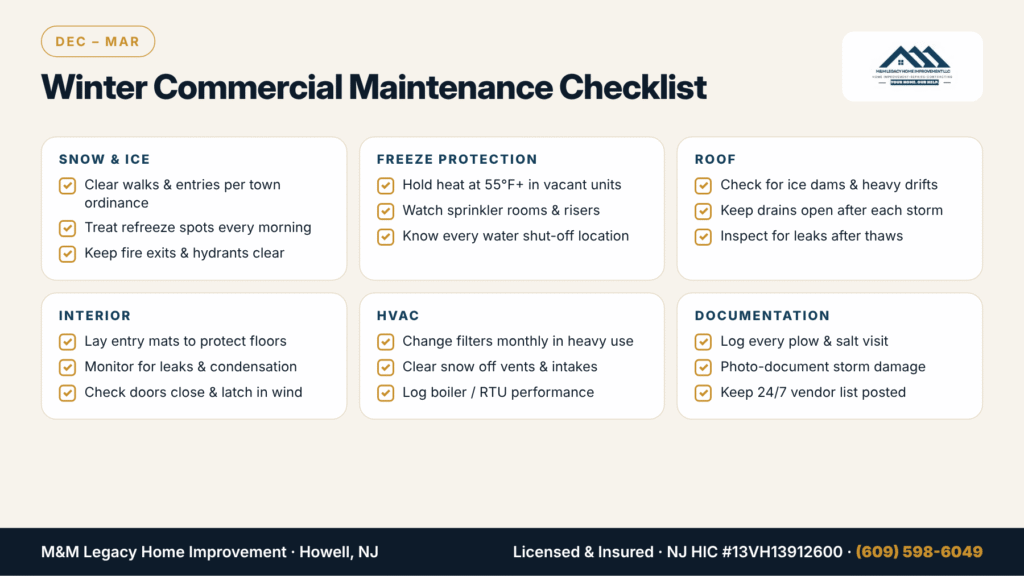 Snow and ice management
- Clear sidewalks, entrances, ramps and ADA routes within your town’s required time after snowfall
- Re-treat refreeze spots every morning — melt-off from roofs and snow piles freezes overnight
- Keep fire exits, fire lanes, hydrants and dumpster access clear
- Pile plowed snow away from drains, entrances and sight lines at exits
Freeze protection
- Keep heat at 55°F or higher in every unit, including vacant spaces
- Check sprinkler rooms, risers and perimeter walls during cold snaps
- Open cabinet doors under sinks on exterior walls during deep freezes
- Make sure staff or tenants know where the water shut-offs are
Roof
- Look for ice dams, icicles over walkways and heavy drifts on flat roofs
- Keep roof drains and scuppers open after each storm
- Check ceilings and top-floor units for leaks after every thaw
Interior and HVAC
- Lay heavy-duty entry mats to protect flooring and prevent slip-and-falls
- Change HVAC filters monthly during heavy heating use
- Clear snow from exhaust vents, intakes and rooftop units
- Watch for condensation, peeling paint and mold at cold exterior walls
Documentation (your best protection in a claim)
- Log every plow, shovel and salt visit with date and time
- Photograph conditions before and after storms
- Keep a 24/7 vendor list posted: plumber, electrician, roofer, handyman, snow contractor
Month-by-Month Maintenance Timeline
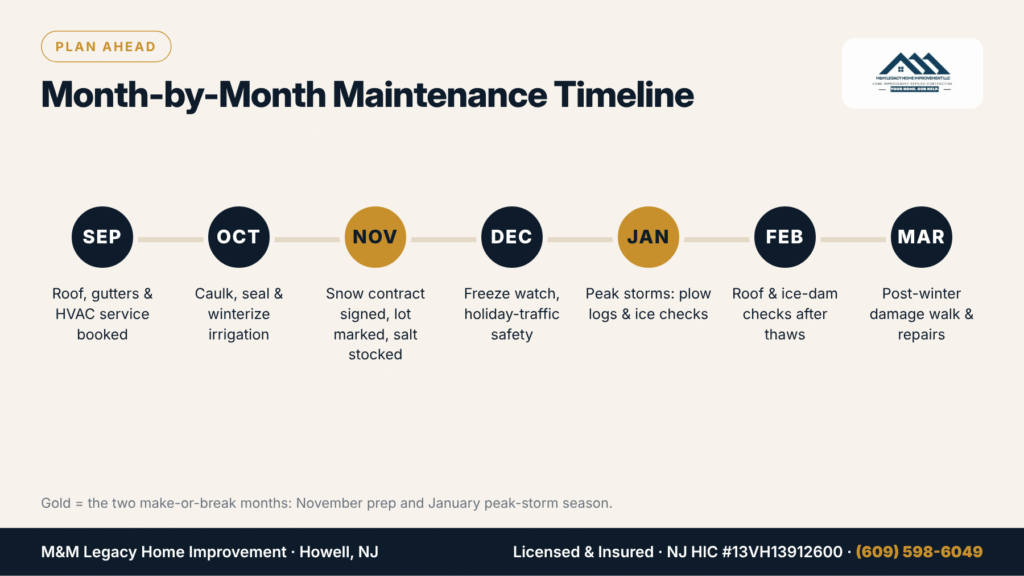 Print this timeline and pin it in your maintenance office. November and January are the two make-or-break months: November is your last calm window to finish prep, and January usually brings the heaviest storm activity and the most refreeze days.
What Skipping Seasonal Maintenance Really Costs
| Skipped task | What it costs later |
|---|---|
| Clearing roof drains and gutters | Ponding water, roof leaks, damaged ceilings and inventory |
| Insulating pipes / keeping heat on in vacant units | Burst pipes, flooded units, new drywall and flooring, lost rent |
| Sealing asphalt cracks | Potholes by spring and a far more expensive repave |
| Snow and ice contract and logs | Slip-and-fall claims with no records to defend them |
| HVAC service | Emergency no-heat calls at premium after-hours rates |
A few hundred dollars of fall maintenance routinely prevents thousands in winter emergency repairs — and keeps tenants renewing.
Frequently Asked Questions
When should I start winterizing a commercial property in New Jersey?
Start in September and aim to finish by the end of November. Leaves, irrigation shut-off and roof drains are the time-sensitive items.
Who is responsible for clearing snow from sidewalks at a commercial property in NJ?
Generally the commercial property owner, including the public sidewalk next to the property. Leases may shift some duties to tenants, and towns set their own clearing deadlines, so review both with your attorney or insurer.
What temperature should a vacant commercial unit be kept at in winter?
A common rule of thumb is at least 55°F, with water shut off or lines drained when the space will stay empty for a long time. Check your insurance policy’s vacancy terms too.
How often should commercial roofs be inspected?
At least twice a year — in spring and fall — and after every major storm.
Can one contractor handle all of this?
Yes. A maintenance partner with carpentry, plumbing, electrical and handyman skills can cover most of the list and coordinate specialists for the rest.
Let M&M Legacy Handle Your Fall & Winter Maintenance
M&M Legacy Home Improvement provides structured commercial property maintenance, on-call commercial handyman service and rental turnovers across Monmouth and Ocean Counties. We’re based in Howell, licensed and insured (NJ HIC #13VH13912600), and built for property managers who need fast response and clear communication.
- Seasonal walkthroughs using this exact checklist
- Caulking, weatherproofing, plumbing and electrical repairs
- Freeze protection and vacant-unit checks
- Tenant turnover with 24–48 hour dispatch
Call (609) 598-6049 or request a free commercial maintenance quote. Learn more about our commercial property maintenance services.
Note for publishing: this checklist is general guidance, not legal advice. Add FAQ schema to the FAQ section in Rank Math or Yoast.